
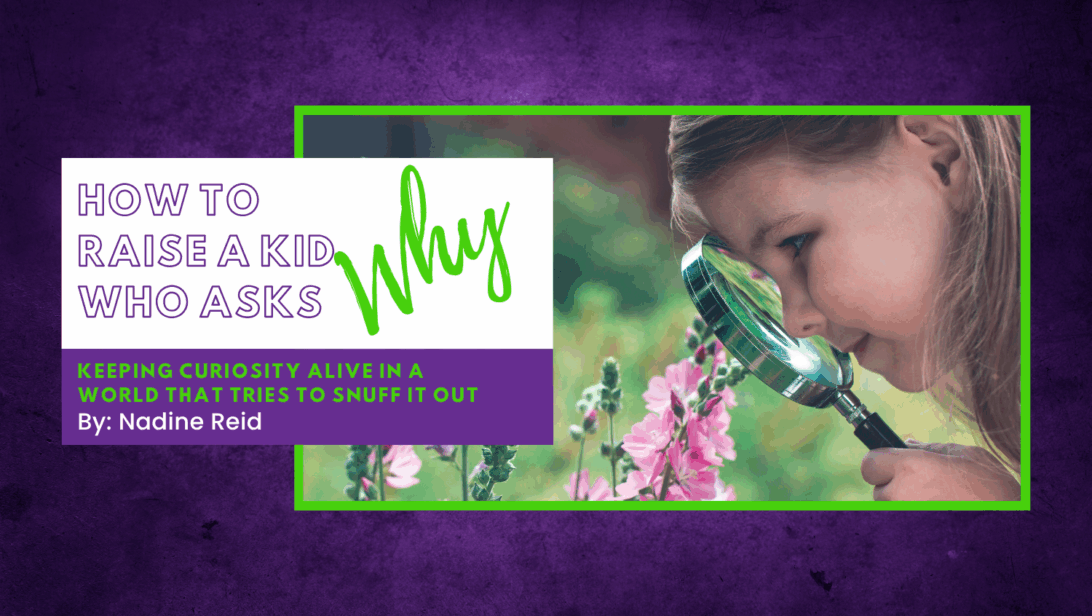
How to Raise a Kid Who Asks Why: Keeping Curiosity Alive in a World That Tries to Snuff It Out
By: Nadine Reid
In a world where screens blink with every distraction imaginable and schedules brim with obligations, a child’s natural love of learning can quietly slip through the cracks. As a parent, you’ve likely seen it before—the way a toddler asks “why” a thousand times a day, or how a seven-year-old proudly explains the life cycle of a frog after one afternoon in the garden. But then middle school hits, or high school stress mounts, and that spark begins to sputter. The good news? You can protect it. Better yet, you can help it thrive.
Normalize Curiosity at Home
Children are born with questions. The way you respond determines whether those questions grow or wilt. You don’t need to know everything—actually, it’s better if you don’t. When your child asks why the sky is blue or how birds know where to migrate, resist the urge to give a quick textbook answer. Instead, wonder out loud with them. Say, “That’s a good question. Let’s find out together.” Normalize not knowing. Normalize being curious. When your kitchen table turns into a hub of wonder instead of a fact-checking battleground, learning becomes a shared adventure instead of a chore.
Celebrate Effort Over Outcome
The danger of gold stars and test scores is that they teach kids to chase approval, not knowledge. Instead of praising your child for an A on a math test, talk about how hard they studied. If they build a lopsided robot from a science kit, don’t fixate on the crooked wheels. Say, “You really stuck with that. Tell me what you figured out.” Learning is messy. It’s meant to be. When your child understands that struggle isn’t failure, but part of the process, they stop fearing mistakes and start embracing them as part of the ride.
Set the Tone by Walking the Path Yourself
One of the most powerful ways to nurture a love of learning in your child is to show them that it doesn’t stop at graduation—it evolves. When you take the leap to return to school, especially while managing work and parenting, you model resilience, curiosity, and personal growth in real time. Online degree programs make this balancing act more attainable, giving you the flexibility to pursue your goals without sidelining your responsibilities (this is a good resource). And when you choose a path like psychology, you dive into the cognitive and emotional forces that shape human behavior, equipping yourself to better support others—and your child sees that, too.
Prioritize Play and Unstructured Time
Somewhere along the way, we turned learning into something rigid and scheduled. But ask any developmental psychologist and they’ll tell you that unstructured play is the richest soil for young minds. Give your child boredom. Let them invent games, build forts, mix strange things in the kitchen. Let them wander and wonder. Overscheduling robs them of this vital mental playground. A Saturday afternoon with no plans can be the birthplace of questions, inventions, even passions. Play isn’t the opposite of learning—it’s the foundation.
Ask Better Questions at the Dinner Table
If you want more than “fine” when you ask how your child’s day was, ask better questions. Try, “What surprised you today?” or “Did you hear something that made you think differently?” These aren’t just conversation starters—they’re learning checkpoints. They teach your child to reflect, to notice, to make meaning. And the more you ask, the more they begin to notice the world around them. Dinner becomes more than a meal. It becomes a nightly ritual of connection and curiosity.
Connect with Community Resources That Nurture Growth
You don’t have to do this alone. In fact, you shouldn’t. Local resources can amplify what you’re building at home. Take a look at organizations like SPARC Hope, which offers guidance, mentoring, and support systems that go beyond the classroom. Whether your child needs help with academic confidence, a mentor who believes in them, or access to a safe, stimulating environment after school, these community networks can be lifelines. Sometimes, it takes a village. And sometimes that village starts with a single link, a single introduction.
Make Room for Their Weird Interests
So, your kid is obsessed with ancient Egyptian embalming practices or watches marble run videos for hours. Good. Lean into it. Buy them a book about it. Let them teach you something. These “weird” fascinations are more than quirks—they’re doors. Doors into deeper thinking, into research, into creativity. When you support these curiosities, you tell your child that learning doesn’t have to look one way. It’s not just about what’s in the curriculum. It’s also about what captures their heart.
Resist the Pressure to Over-Optimize
You’ve probably felt it—the subtle anxiety of keeping up. The sense that if your child isn’t coding by 10 or playing violin competitively by 12, they’ll fall behind. But education is not a race. It’s a relationship—between a child and the world, between a parent and a learner. Let your child’s love of learning guide you, not test prep. Let joy and wonder lead the way, not fear of failure. In the long run, curiosity outpaces any cram session. Trust that.
The truth is, loving to learn isn’t something your child turns on and off. It’s a muscle you help them build—through your actions, your conversations, your values. And like any muscle, it needs time, repetition, and encouragement. Yes, the school system will have its flaws. Yes, some days will feel like a slog. But if you hold space for curiosity, model engagement, and reach out to resources like SPARC Hope when you need support, you’re doing more than enough. You’re raising a lifelong learner, and that’s a gift they’ll carry far beyond the classroom.
How to Raise a Kid Who Asks Why. By Nadine Reid
Discover how SPARC Hope is transforming lives by empowering single parents through education and support. Visit SPARC Hope to learn more about their impactful programs and join their mission today!
Other Ways to Connect
We hope you found this article; How to Raise a Kid Who Asks Why! Please connect with us on Facebook and Instagram and let us know what you think.
If you would like to learn more about upcoming events, sign up to receive our quarterly newsletter here.
Check out some of our other blog posts here, for tips and tricks for single parents, budget hacks, inspiration and more information about what we do here at SPARC Hope.